About Polis
The idea
When talking with people about politics, I often ask folks what evidence they would accept that would make them realize their current position is wrong? What policy or event would occur which would make you regret voting for a candidate?
Our news cycles move way too fast and folks are so tribal that I don't see people reflect. What has actually been solved by our politicians?
Polis was meant to be an app asking: are the things that matter to you truly being handled? It somewhat accomplishes that, but just barely.
Limitations
It has three major problems which mean it probably won't evolve much past its current state:
- The cold start problem. For this type of app to be useful, it needs a lot of users with diverse viewpoints. Sharing with friends and family won't generate enough ratings.
- The visualizations don't yield deep insights. Americans disagree on what is important and how things are being solved. If we wanted real insights, we'd need to find a way to get folks to share deeply, regularly as they engage with media. That isn't going to happen with this two-week hobby project.
- Everything is important at all times to everyone. The real lack of prioritization may be a big issue here.
Rapid creation
I wanted to test whether I could create a fully-functioning app in two weeks without obsessing over the technical implementation.
I was inspired by my brother, who has a moderately successful app on the App Store. While my brother is technical, he never made an iOS app before and relied on genAI to write the code. The functionality and design are all very good. I genuinely am impressed with what he and the AI built together.
I often stop a project about one-third into it as I note some critical flaw. I take my favorite quote from Dune a little too seriously for hobby projects:
Arrakis teaches the attitude of the knife—chopping off what's incomplete and saying: "Now, it's complete because it's ended here."
So, Polis is an experiment for me. I wanted to try out this whole vibe-code thing but with a twist. I use AI a lot already for collaboration, but I often go to tweak code. In this case, I wanted to be prescriptive with the design but deploy a fully public app with little technical intervention.
Essentially, the question I wanted to answer was: can I tell Claude what I want, but completely ignore the how?
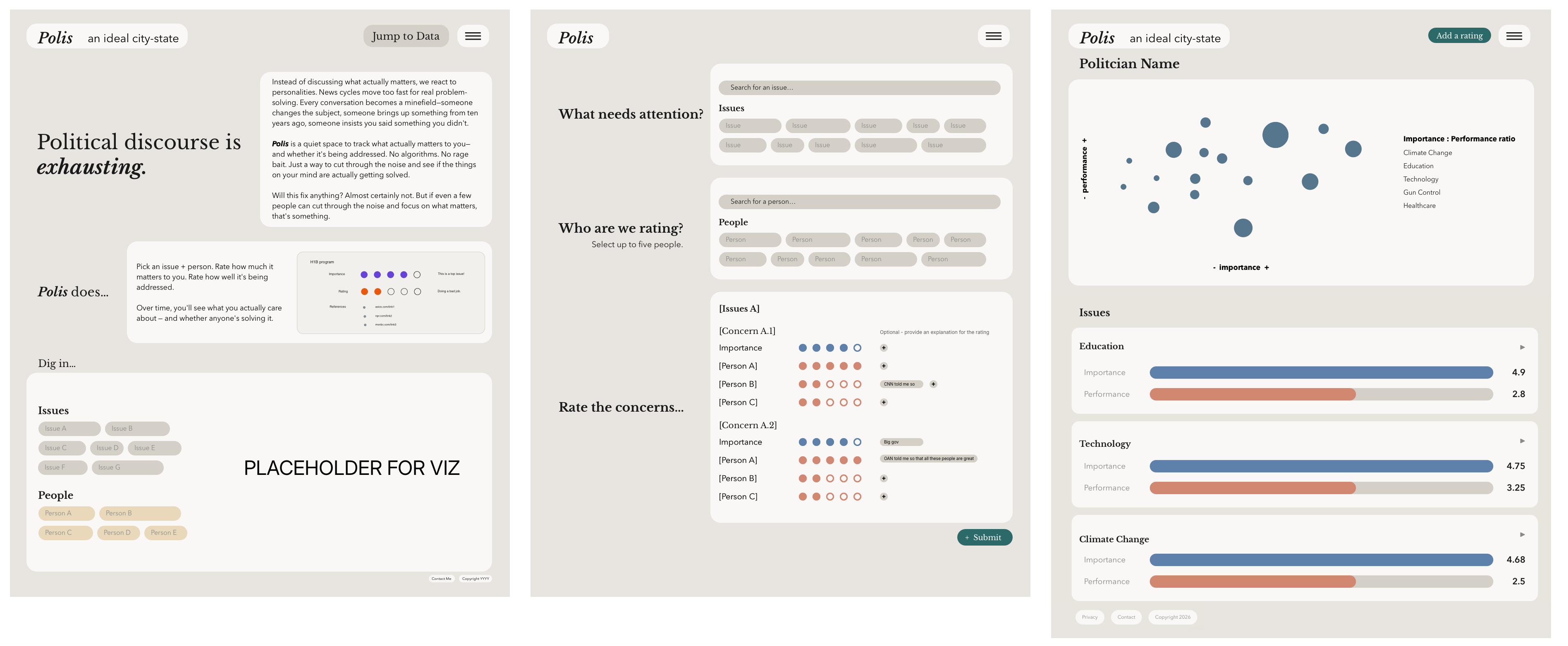
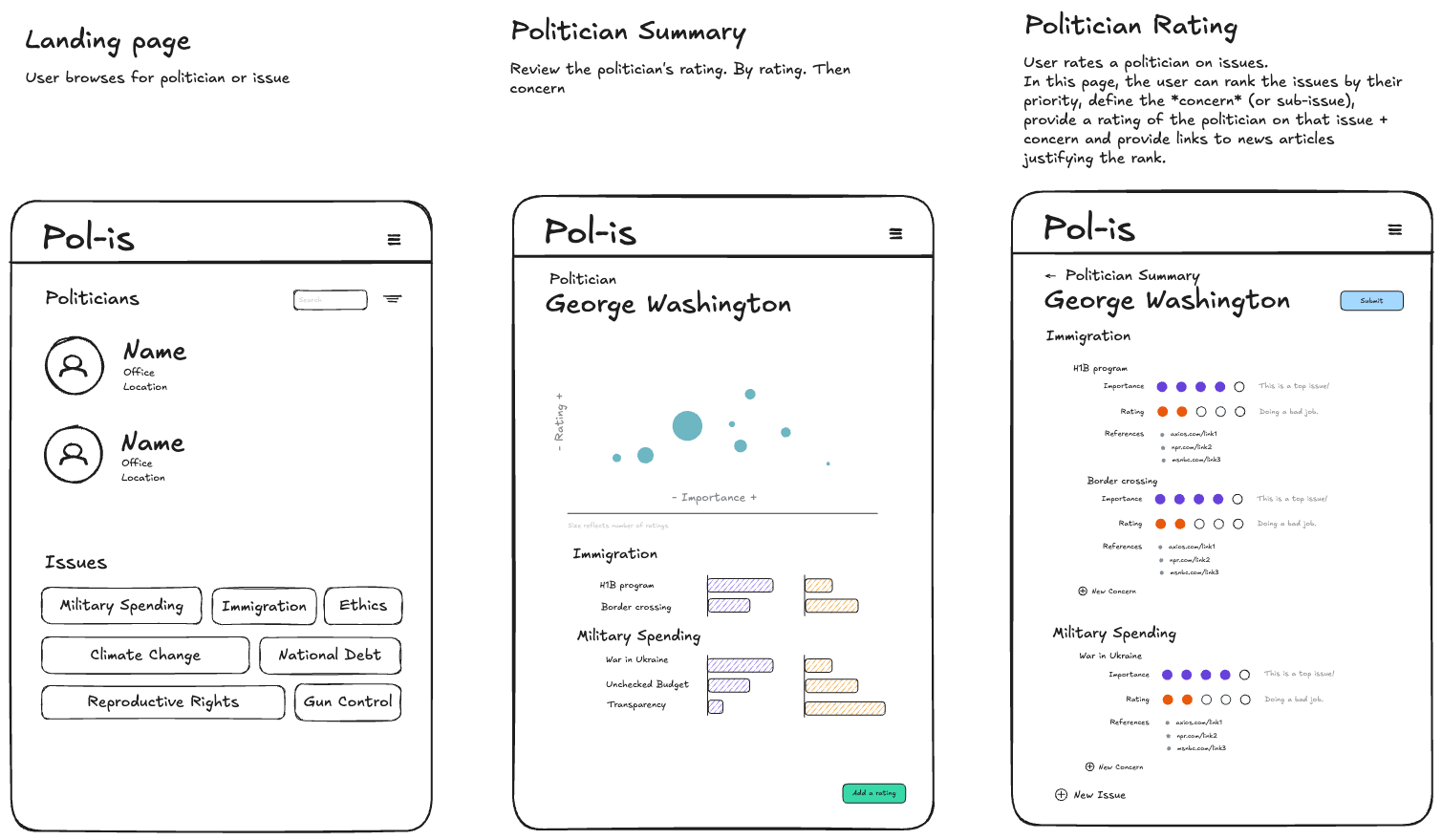
I designed the basic layouts, crude visualizations as wireframes, then mockups in Sketch — a design software. I generated a rough data model, then let Claude Opus do the rest. I provided corrections but didn't intervene with any internal mechanics.
The process is slick. Claude Opus 4.5 is very good at building Django, HTMX and D3.js apps. Using Sketch to course correct designs was intuitive and enjoyable.
I think I'll be playing a lot more with:
Product Doc -> Data Model -> Excalidraw -> Sketch -> Claude-built App
workflows in the future.
Initial Sketches
Mockup